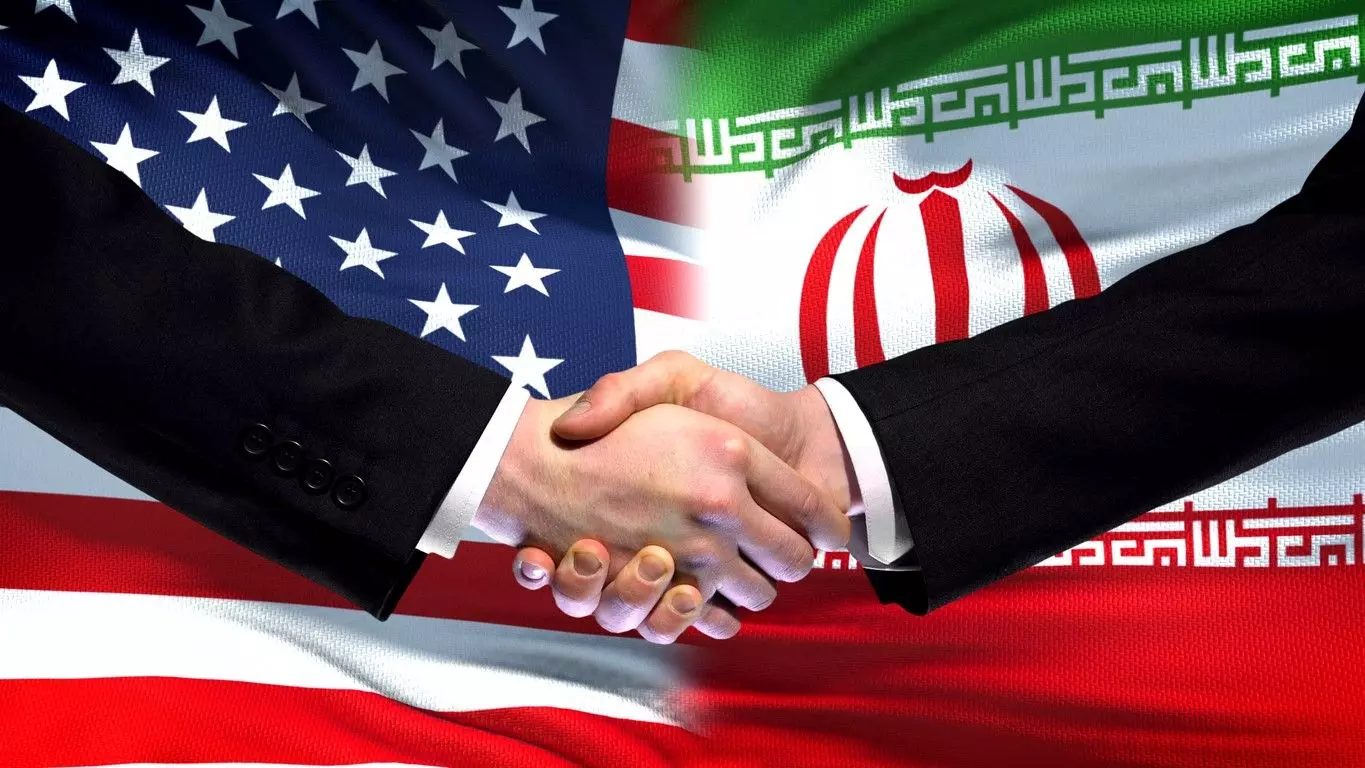
KABUL: Negotiations between the United States and Iran, scheduled to resume this weekend in Switzerland, have been postponed following a renewed escalation of military tensions between the two sides, The Wall Street Journal reported, citing informed sources.
The talks were intended to continue after Washington and Tehran signed a preliminary 14-point framework agreement aimed at reaching a final deal to permanently ease tensions.
The negotiations were to be held at the Bürgenstock resort in Switzerland, with the first round originally scheduled for June 19, and it was expected that U.S. Vice President J.D. Vance would lead the American delegation.
However, following intensified Israeli military operations in southern Lebanon, the Iranian delegation declined to attend the planned meeting, and Vice President Vance’s visit was subsequently canceled.
According to informed sources, the negotiations were eventually held with a two-day delay and facilitated through mediation by Pakistan’s prime minister. Nevertheless, the continuation of the diplomatic process has now been placed in doubt due to recent military developments.
At the same time, tensions between Iran and the United States have intensified on the ground. Iran’s Islamic Revolutionary Guard Corps (IRGC) announced that, in response to U.S. military actions, it had targeted American military facilities in Kuwait and Bahrain using ballistic missiles and unmanned aerial vehicles.
A U.S. official has confirmed that attacks occurred but stated that there were no American casualties and limited damage to military installations.
Meanwhile, the U.S. Central Command (CENTCOM) announced that it had carried out strikes against Iranian military positions following a drone attack on a commercial tanker in the Strait of Hormuz.
According to CENTCOM, the targets included surveillance facilities, communication systems, air defense sites, drone storage facilities, and infrastructure associated with naval mine operations.
In Lebanon, Israel has also announced the continuation of military operations against Hezbollah positions and forces in southern Lebanon. This development, analysts believe, has further complicated the diplomatic environment surrounding negotiations between Tehran and Washington.
Overall, while diplomatic channels between Iran and the United States remain open, the simultaneous escalation of military confrontations in the Persian Gulf and Lebanon has increased uncertainty surrounding the future of the negotiations and the prospects for reaching a final agreement.
U.S.-Iran talks in Switzerland postponed amid escalating military tensions